First: what you're actually buying
Spotify's rules are clear: paid services that guarantee streams aren't legitimate, and neither are services that sell guaranteed playlist placement.
The services below work differently. They charge for a curator's time: a listen, a review, a piece of feedback. Whether your song gets added is up to the curator. That's the model to look for. If any service guarantees streams or a placement, walk away.
The services, side by side
You pay for · Costs · Guaranteed
| Service | You pay for | Costs | Guaranteed |
|---|---|---|---|
| Playlist Push | A campaign: curators review your song | From $280 | Nothing |
| Groover | Each curator you contact | About €2 a contact | Feedback in 7 days, or Grooviz back |
| SubmitHub | Each curator you send to, in credits | $0.78–1 a credit, or free | Premium: an answer in 72 hours, or credit back |
| SoundCampaign | Each review, from a budget you set | Your budget | Only reviews that happen |
| MusoSoup | One campaign; curators make offers | £42 | Fee back if no coverage |
| Daily Playlists | Submissions to listed playlists | Free, or paid credits | No placements |
More detail:
- Playlist Push runs TikTok creator campaigns too, from $350. It says it "does not offer any guarantees".
- Groover covers playlists, media, radio and labels. Top curators ask 4 or 6 Grooviz instead of 2; packs start at €46.
- SubmitHub reaches blogs, playlists, labels, YouTube channels and influencers. Curators ask 1 to 4 credits per song. With premium credits, they listen for at least 60 seconds and approve or give 20 words of feedback, or your credit comes back.
- SoundCampaign sends your song to Spotify curators and TikTok creators, and also runs Meta ads.
- MusoSoup charges its fee only after your song is approved; blogs, playlists, stations and influencers then send offers, paid or free.
- Daily Playlists Premium Credits promise engagement, not placement.
Prices change: check each site before you buy.

Which one for what
- You want honest feedback first: SubmitHub's premium credits or Groover. Both make curators listen and answer, and both give your credit back if they don't.
- You want press and blogs as well as playlists: MusoSoup or Groover.
- You want a hands-off Spotify campaign: Playlist Push or SoundCampaign. Playlist Push needs the bigger budget.
- You have no budget: Daily Playlists and SubmitHub's free standard credits. Expect fewer answers.
- You want Spotify's editorial playlists: none of these. They work with independent curators, not Spotify's editors. Pitch the editors yourself in Spotify for Artists, for free.
How to judge any promotion service
- No guarantees of streams or placements. That's Spotify's line, and the honest services respect it.
- Curators are paid for listening, not for adding.
- You can see the curators and their playlists before you pay.
- A clear rule for when you get your money back.
- Real playlists, with real listeners. A playlist with many followers and few listeners can be padded. When Spotify confirms artificial streams on a song, it can withhold the royalties and remove the song from its playlists.
What a playlist add really gets you
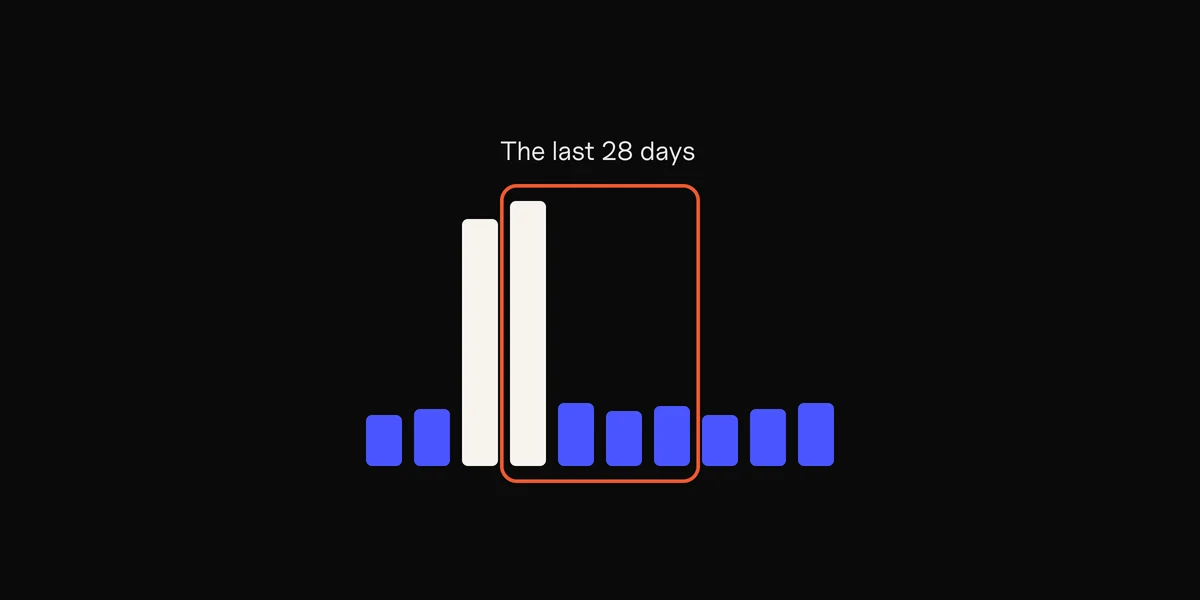
Playlist listeners count in your monthly listeners, but Spotify for Artists calls them programmed listeners until they play you on purpose. They're rented reach: when the playlist drops your song, their plays stop.
What lasts is listeners who come back. In Spotify's own Fan Study, about two-thirds of super listeners were still listening six months later, against about one-third of light listeners, and a listener who adds you to their own playlist streams you 41% more. Our monthly listeners guide explains the groups.
When your own ads get you more
A promotion service puts your song in front of curators. An ad puts it in front of listeners you choose, and shows you what happens:
- You pick who hears it: fans of artists like you, in the cities you play.
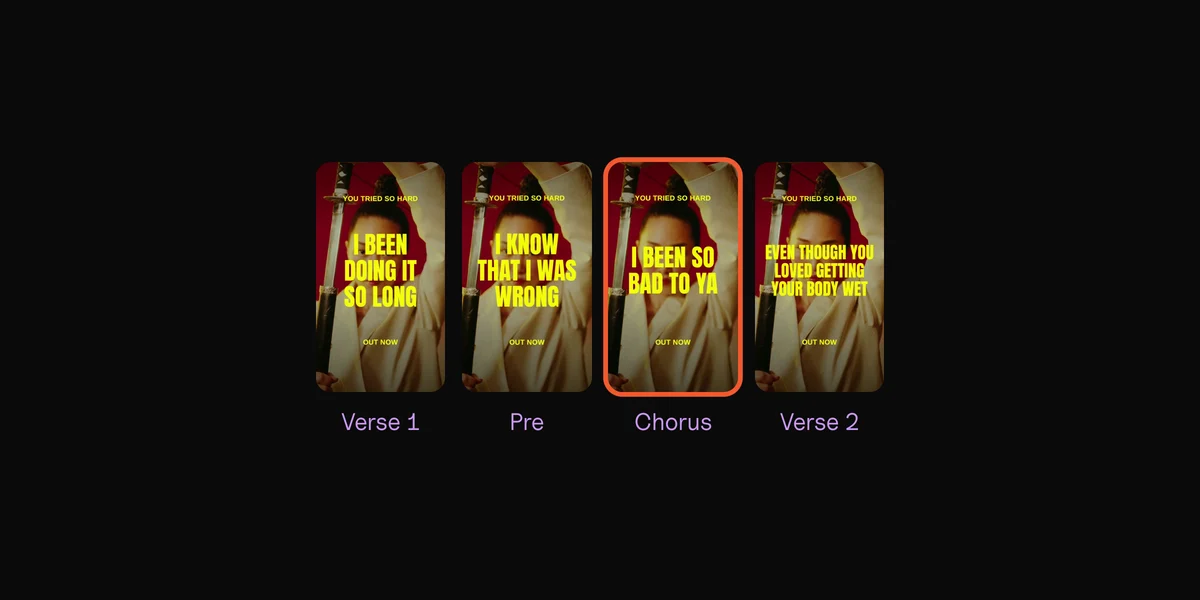
- You pick the part of the song. The intro, the chorus or the bridge: whichever makes people tap.
- You see the cost of every listener, and you can stop or change the ad any day.
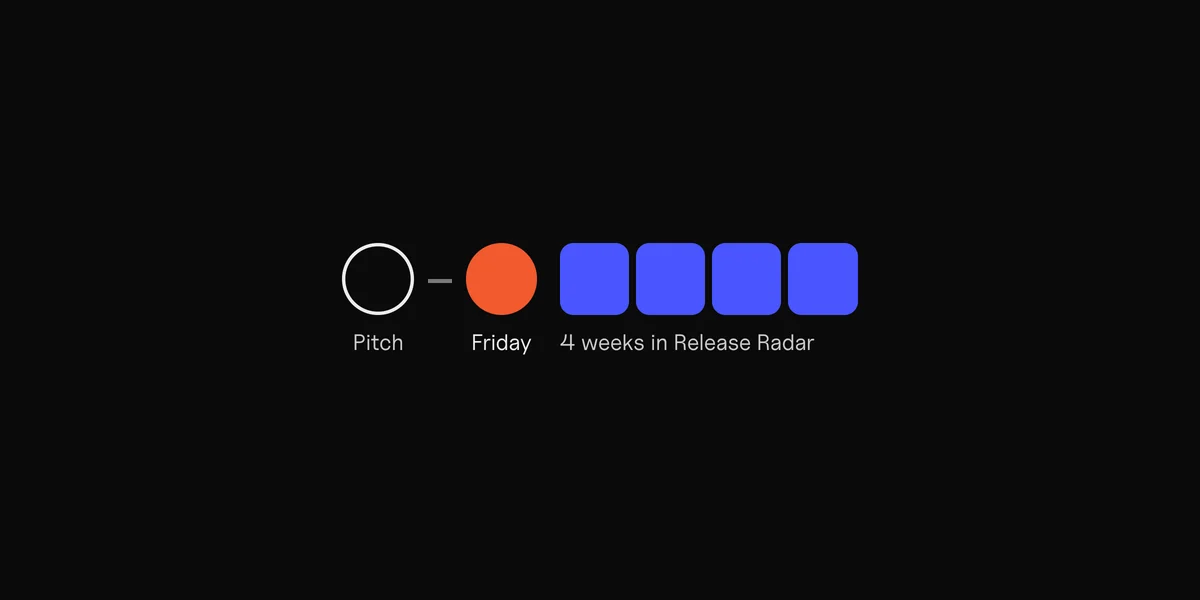
- The people who tap chose to listen. They're the ones who save and follow, and followers get your next release in their Release Radar.
The budget of one Playlist Push campaign runs a real ad test across several parts of your song. Our guide to promoting a song with ads shows how.
You don't have to pick one. Pitch for feedback and the occasional playlist; run ads for listeners who stay.
One song in. An ad for every part.
The budget of one campaign tests every part of your song for a week.
By hand in an editor
Making 15 videos takes all evening.
Clips
Every part on every backdrop, in one export.
Questions
Is Playlist Push legit?
It pays curators to review your song and says plainly that it guarantees no results, which is the model Spotify accepts. Whether it's worth $280 or more depends on your goal: you're paying for curators' attention, not for placements.
Groover or SubmitHub?
Groover charges per contact (about €2) and promises feedback within 7 days, across playlists, media, radio and labels. SubmitHub works with credits ($0.78 to $1 each, 1 to 4 per curator), and premium credits guarantee a 60-second listen and an answer within 72 hours. Both give your credit back when a curator doesn't answer.
How much does Spotify promotion cost?
From free (Daily Playlists, SubmitHub's standard credits) to about €2 per Groover contact, a £42 MusoSoup campaign, and $280 or more for a Playlist Push campaign.
Is paying for Spotify playlists allowed?
Paying for guaranteed streams or a guaranteed placement isn't: Spotify says those services aren't legitimate. Paying for a curator's time to listen and decide is how the services above work.
Can a promotion service get me on Spotify's editorial playlists?
No. These services work with independent curators, not Spotify's editors. You pitch the editors yourself in Spotify for Artists, for free, at least 7 days before release.
Sources
- Playlist Push pricing
- Groover pricing
- Standard and premium credits, SubmitHub
- SoundCampaign
- MusoSoup
- Daily Playlists
- Artificial streaming and paid 3rd-party services that guarantee streams, Spotify for Artists
- Pitching music to Spotify playlist editors, Spotify for Artists
- Audience segments on Spotify and Fan Study: fan connection, Spotify for Artists
 Clips4 min read