How to use it
- Paste the chords, as you'd write them:
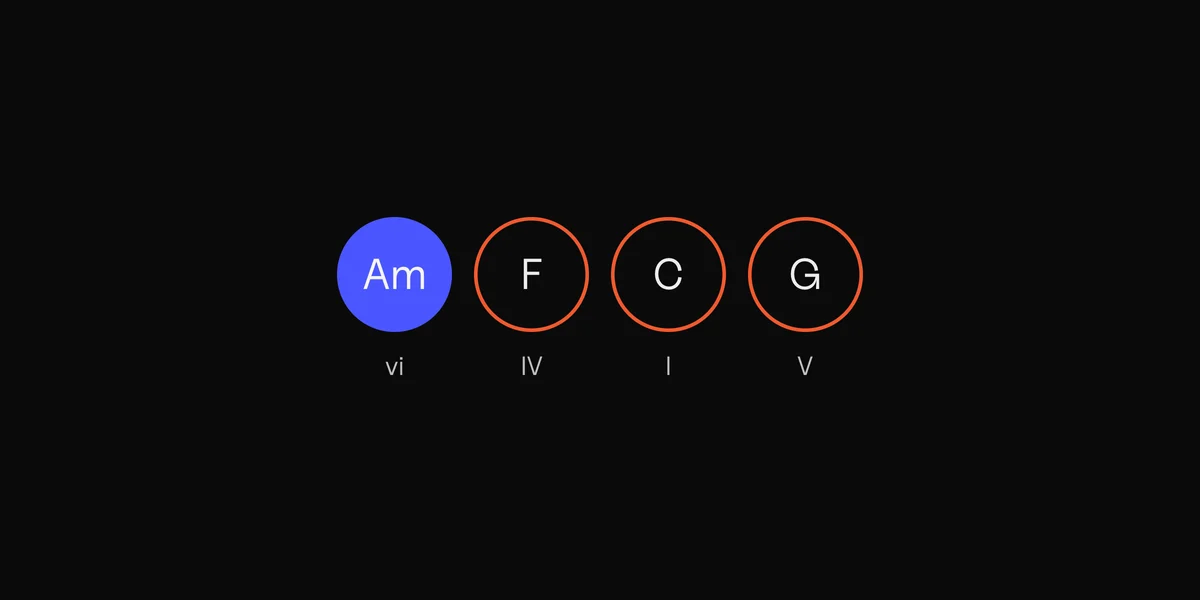
C G Am F,Am | F | C | G, slash chords likeD/F#included. Words in between are left alone. - Pick the move: a number of steps (half steps) up or down, or the key you want.
- Copy the result. Sharps or flats follow the new key: moving
C G Am Fup five steps givesF C Dm B♭, not A♯.
Why transpose a song?
- To fit your voice. If the chorus sits too high, move the whole song down a step or two and sing it again.
- To play it in easier shapes. On guitar, a key with open chords (C, G, D, A, E) is easier than one full of barre chords.
- To match a track or another player, when a sample, a backing track or a horn part is in a different key.
Half steps, whole steps and keys
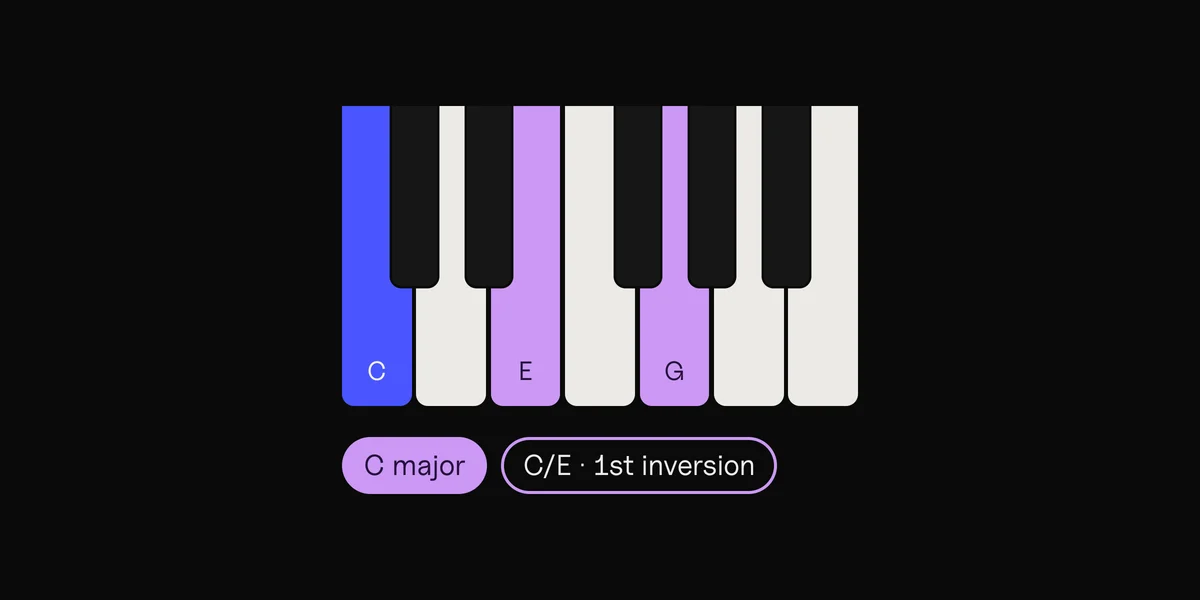
Moving one half step (one semitone) is one key on the piano or one fret on the guitar. Two half steps make a whole step. Twelve half steps bring you back to the same key, an octave higher.
Up 1 half step
C → D♭
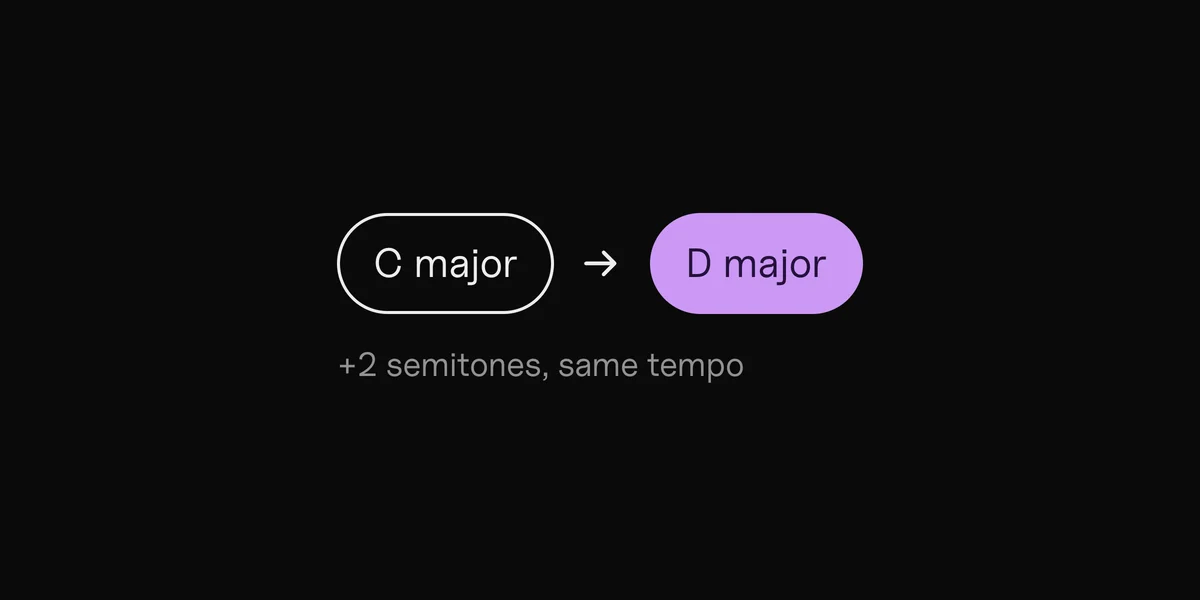
Up 2 (a whole step)
C → D
Up 5
C → F
Up 7
C → G
Down 2
C → B♭
Capo chart
A capo raises every chord by one half step per fret. To play a song in a key you know with a capo, find the shape you'll play and the fret:
| Shape | 1 | 2 | 3 | 4 | 5 | 6 | 7 |
|---|---|---|---|---|---|---|---|
| C | D♭ | D | E♭ | E | F | G♭ | G |
| A | B♭ | B | C | D♭ | D | E♭ | E |
| G | A♭ | A | B♭ | B | C | D♭ | D |
| E | F | G♭ | G | A♭ | A | B♭ | B |
| D | E♭ | E | F | G♭ | G | A♭ | A |
| Am | B♭m | Bm | Cm | C♯m | Dm | E♭m | Em |
| Em | Fm | F♯m | Gm | G♯m | Am | B♭m | Bm |
So to play in E♭ with C shapes, put the capo on the 3rd fret.
Find the key first
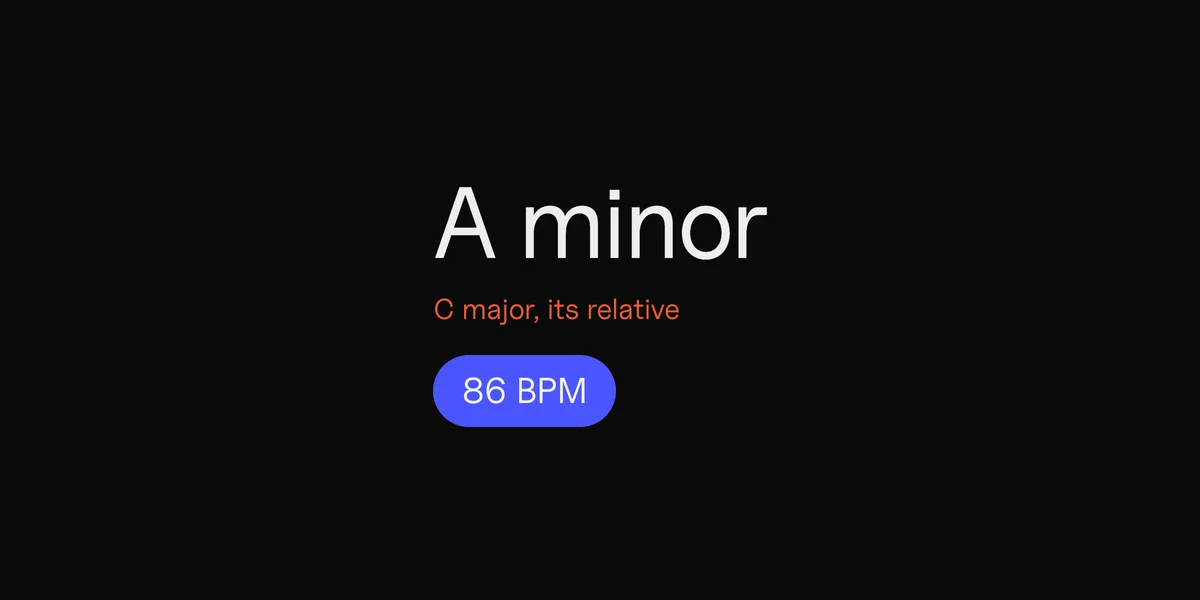
If you don't know which key the song is in, drop it into our free key finder. To see every chord in a key, open its key page.
Play any song. Get its chords as MIDI.
By ear
A keyboard and a slow hour.
DOT
Press ⌘R while it plays.
Questions
How do I transpose chords to another key?
Move every chord by the same number of half steps. From C to D is two half steps up, so C becomes D, G becomes A and Am becomes Bm. The transposer does all of it at once.
What is C transposed up a whole step?
D. A whole step is two half steps: C, C♯, D.
Should I use sharps or flats?
Whichever the new key uses. Keys like F, B♭ and E♭ are written with flats; G, D, A and E with sharps. The transposer picks for you.
What does a capo do?
It raises the pitch of every string by one half step per fret, so the same chord shapes sound in a higher key.
 DOT5 min read