How to use the chord finder
- Pick the notes. Tap keys on the piano, or frets on the guitar (tap a string's left end to mute it). The lowest note counts as the bass.
- Read the name. The best match is on top, with the notes spelled from its root and whether it's in root position or an inversion.
- Hear it, and see where it lives. Play the chord, and see the keys it belongs to with its Roman numeral in each, so you know which chords sound good next to it.
It names every common chord: major, minor, diminished, augmented, sus2 and sus4, power chords, 6ths, 7ths, 9ths, 11ths and 13ths, with or without the 5th.
How chords get their names
A chord's name has three parts:
- The root, the note it's built on: the C in Cm7.
- The quality, the kind of chord: m for minor, 7 for a 7th, maj7, sus4 and so on.
- The bass, after a slash, when the lowest note isn't the root: C/E is a C chord with E at the bottom.
The same notes can have two names. C, E, G and A is C6 with C in the bass, or Am7/C. The finder lists both, best first; the song around it decides which one is meant.
Chord types, all on C
Triads
Suspended and power chords
Sixths and sevenths
Ninths
Inversions and slash chords
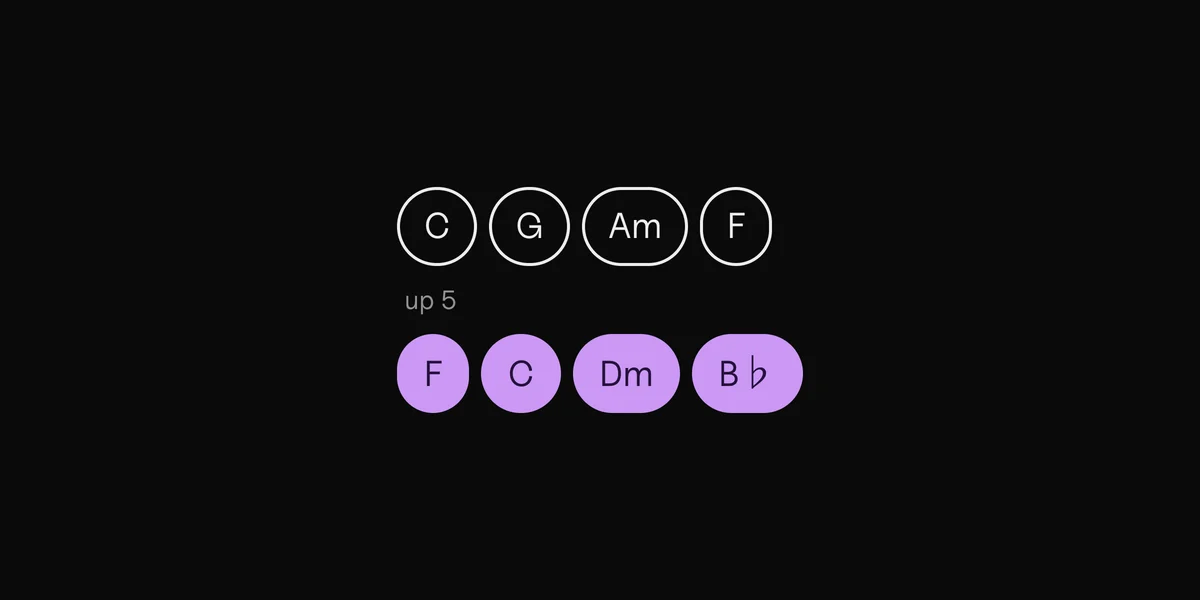
A chord is in root position when its root is the lowest note. Move another chord tone to the bottom and you get an inversion: C/E is the 1st inversion of C (the 3rd in the bass), C/G the 2nd (the 5th in the bass). Pianists and producers use inversions to move between chords smoothly, with each note stepping only a little.
Inversions are written as slash chords: G/B is G with its 3rd, B, in the bass; D/F♯ is D with F♯ at the bottom.
What key is this chord in?
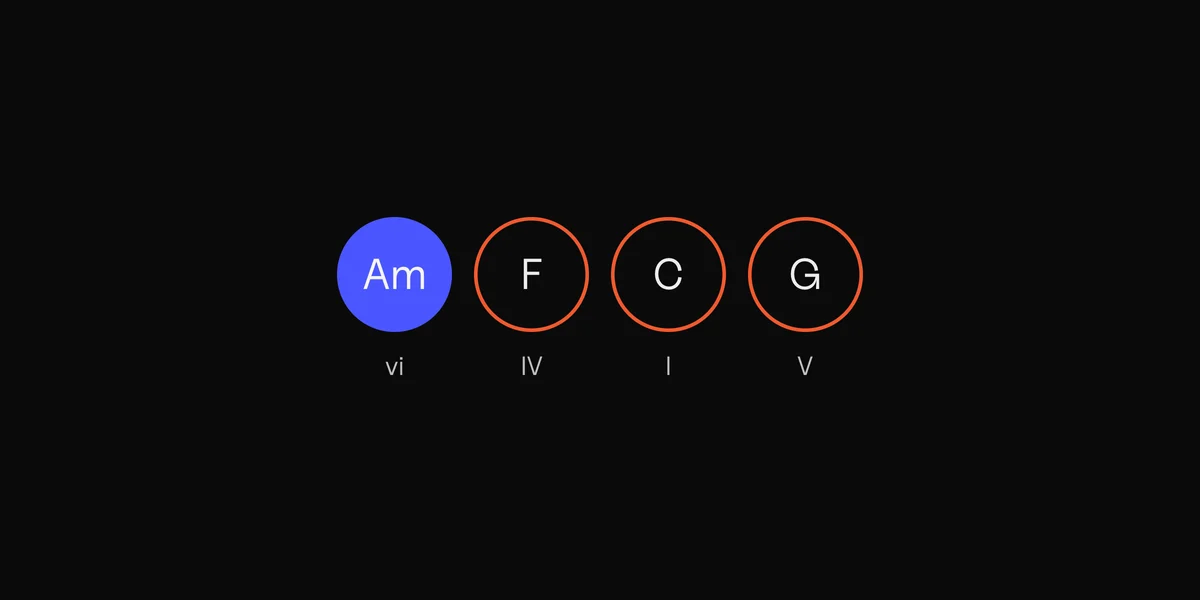
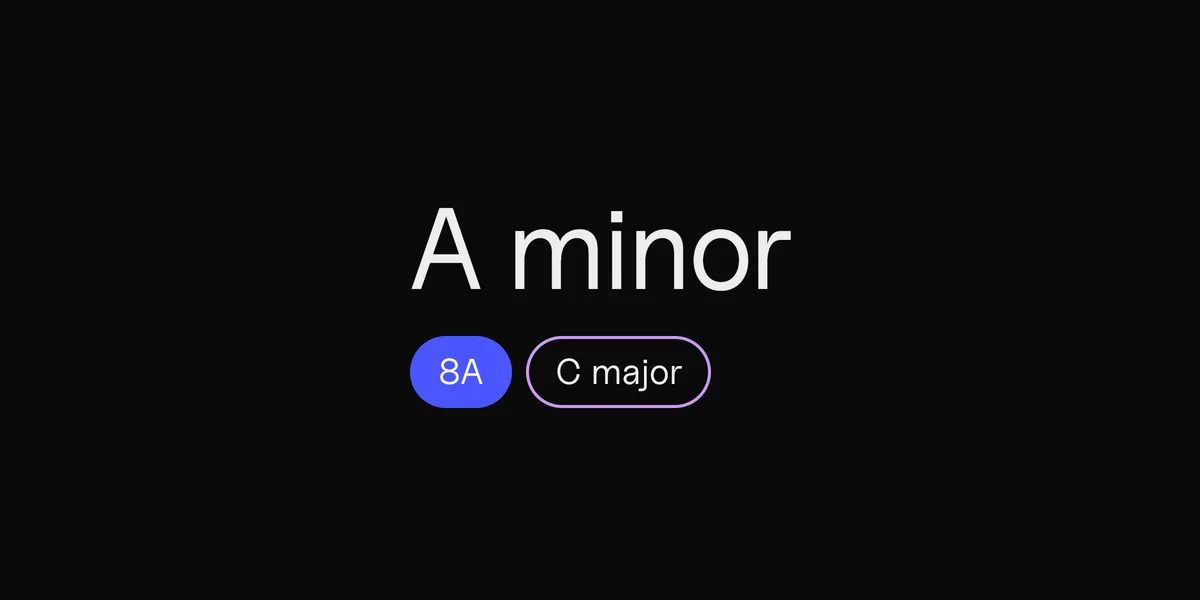
Every chord lives in several keys. C is the I in C major, the IV in G major, the V in F major, and also appears in A minor, E minor and D minor. The chord finder lists every key a chord fits, and each name opens that key's page with its scale and the other chords in it.
C
Major · CEG
Keys with this chord
Find the chords of a whole song
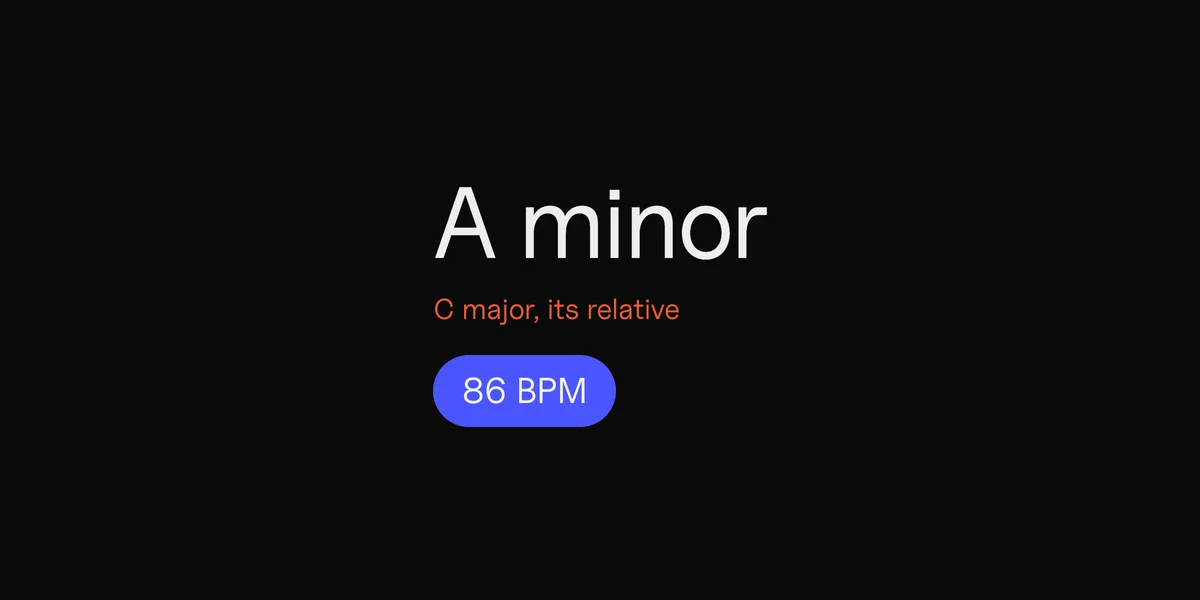
Naming one chord at a time works for a chord you can play. For the chords of a song you're listening to, DOT records whatever your Mac plays and shows its chords as it goes, with the key and tempo, and saves the chords as MIDI.
Play any song. Get its chords as MIDI.
By ear
A keyboard and a slow hour.
DOT
Press ⌘R while it plays.
Questions
What chord is C, E and G?
C major. With E in the bass it's C/E, the 1st inversion; with G in the bass it's C/G, the 2nd.
What chord is A, C and E?
A minor (Am). The same notes with C in the bass are Am/C.
What does m7♭5 mean?
A half-diminished 7th chord: a diminished triad plus a minor 7th. Bm7♭5 is B, D, F and A, the chord on the 7th note of C major.
What is a slash chord?
A chord with a different note in the bass, written after a slash: C/E is a C chord with E at the bottom.
How do I find a chord on guitar?
Switch the finder to guitar, tap the fret you press on each string, and mute the strings you don't play. The chord's name appears as you go.
Can it find the chords of a song from audio?
Not this page: it names the notes you pick. To get the chords of a song as it plays, use DOT, or try our key finder for the song's key.
 DOT5 min read