The formula
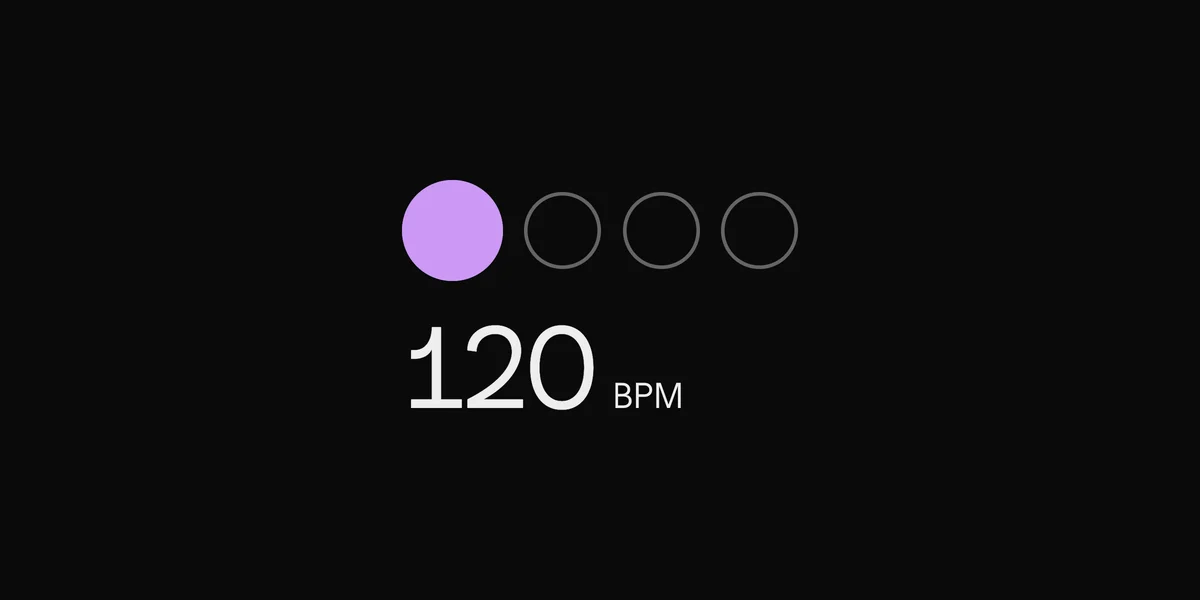
A quarter note lasts 60,000 ÷ BPM milliseconds. At 120 BPM that's 500 ms. Everything else follows:
- Half the length for each smaller note: an 8th is 250 ms at 120 BPM, a 16th 125 ms.
- Dotted notes are 1.5 times as long: a dotted 8th at 120 BPM is 375 ms.
- Triplets are two thirds as long: an 8th-note triplet at 120 BPM is about 167 ms.
To go the other way, a quarter note of 500 ms means 60,000 ÷ 500 = 120 BPM.
Where to use it
- Delay time: set it to a note value so the echoes land on the grid. A dotted 8th is a classic for guitars and vocals.
- Reverb pre-delay: a short note value (a 32nd or 64th) keeps the reverb from smearing the start of each note.
- LFOs, tremolo and auto-pan: set the rate in Hz from the table to make movement pulse with the song.
- Compressor release: set near a note value so the gain recovers in time with the groove.
Most DAWs and plugins can sync to the tempo by themselves. The numbers help for hardware, for plugins without a sync button, and for working out what "sync" is doing.
Don't know the BPM?
Drop the song into our free BPM finder, or tap along on tap tempo.
Questions
How many milliseconds is a beat at 120 BPM?
500 ms. One beat (a quarter note) is 60,000 ÷ 120.
What is a dotted 8th at 120 BPM?
375 ms: an 8th note is 250 ms, and a dotted note is 1.5 times as long.
How do I convert BPM to Hz?
Divide by 60 for quarter notes: 120 BPM is 2 Hz. The table gives the Hz for every note value.
 DOT7 min read
 Clips10 min read