How to use the chord progression generator
- Pick a mood, and a genre if you like. Choose the key, how many chords and how rich they are, then press Generate.
- Make it yours. Tap a chord to hear it. Drag cards to change the order. Lock the chords you want to keep and generate again, or swap one for another that fits.
- Add a beat. Pick one of 18 styles, from pop, R&B and trap to jazz, bossa nova and country, and the chords loop over it. New beat tries another pattern in the same style. Switch to Guitar or Strum to hear the chords strummed.
- Take it away. Download it as MIDI at your tempo, with the drums if you like.
Have chords already? Switch to Play your own, type them in, and hear them with the same beat and MIDI download.
Famous chord progressions
The progressions behind thousands of songs, in C. Play one, or open it in the tool to change its key, swap a chord and download it.
The four-chord song · Let It Be, With or Without You
The sad pop progression · Zombie, Apologize
The 50s progression · Stand by Me
The ii–V–I · Autumn Leaves
Blues in 8 bars · Johnny B. Goode
The epic minor progression · Numb
The Andalusian cadence · Hit the Road Jack
How chord progressions work
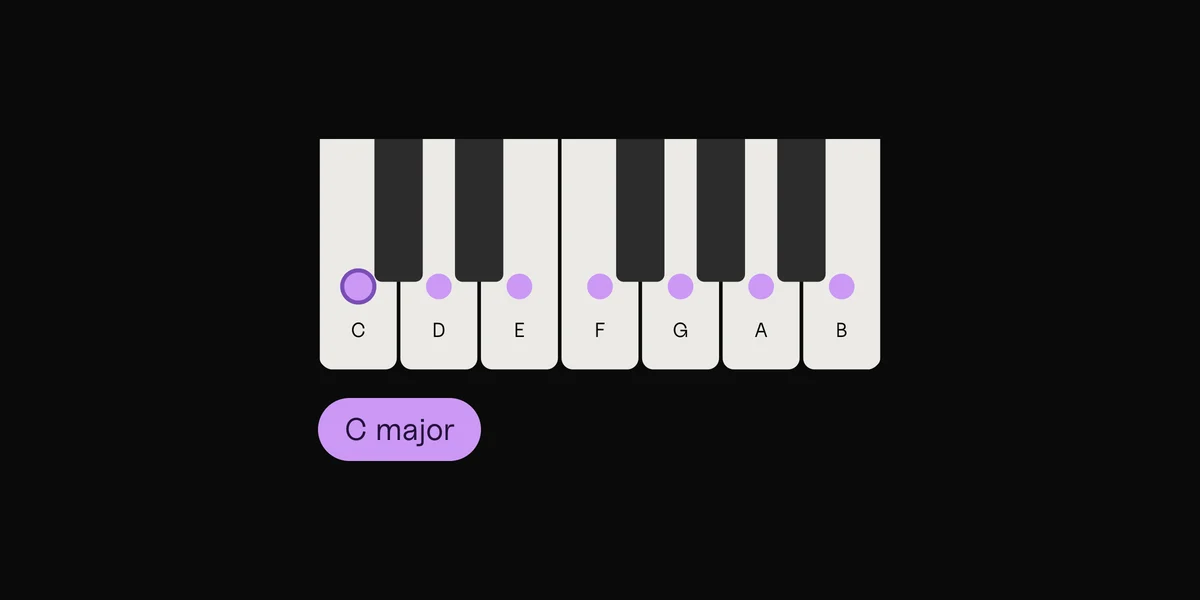
Every key has seven chords, one on each note of its scale. Roman numerals name them by their place: upper case for major, lower case for minor. In C major:
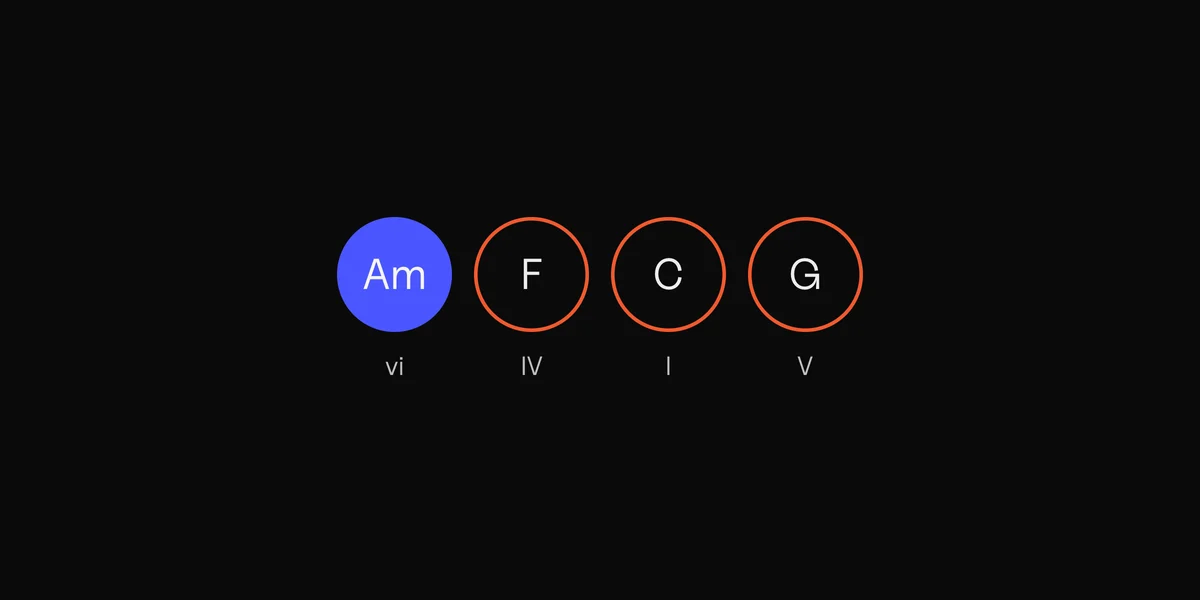
Some chords feel like home and some want to move. I is home. V is the most restless: it pulls back to I, and that pull is what makes a progression land. IV and vi sit in between, which is why I–V–vi–IV keeps moving and still feels settled.
Moods come from which chords you use. Major chords and the move V to I sound bright; starting on vi or i sounds sad; 7ths and 9ths add a soft, dreamy color.
Chord progressions by genre and mood
- Jazz chord progressions: the ii–V–I, rhythm changes and more, in 7th chords
- R&B chord progressions: 9th chords, neo soul and the Just the Two of Us progression
- Sad chord progressions: vi–IV–I–V and the minor-key progressions behind sad songs
- Minor chord progressions: how minor keys work, and the progressions in them
Heard a progression you love?
Questions
What is a chord progression?
The chords of a song in the order they're played. Most pop songs loop three or four chords; the order and the rhythm make them feel different.
What are the most common chord progressions?
I–V–vi–IV (C, G, Am, F in C major), vi–IV–I–V, I–vi–IV–V and ii–V–I. They're all under Famous chord progressions, ready to play and load into the tool.
What do the Roman numerals mean?
Each chord's place in the key: I is built on the 1st note, V on the 5th. Upper case is major, lower case minor. The same numerals work in every key, so a progression moves to any key as it is.
How do I use the MIDI file in my DAW?
Drag it onto a software instrument track in Ableton Live, Logic Pro, FL Studio or GarageBand. It has one chord per bar at the tempo you set, in the key you picked. With Include drums on, the beat comes along as General MIDI drums on channel 10, ready for a drum rack.
Can I use these progressions in my songs?
Yes. Chord progressions can't be owned, and what you make with them is yours.
Can it find the chords of a song I'm listening to?
Not this page: it writes progressions. To get the chords of a song as it plays, use DOT, or the chord finder to name chords you play.
Piano sounds by the Salamander Grand Piano (Alexander Holm), CC BY 3.0. Guitar sounds from the University of Iowa Electronic Music Studios.
 DOT5 min read